


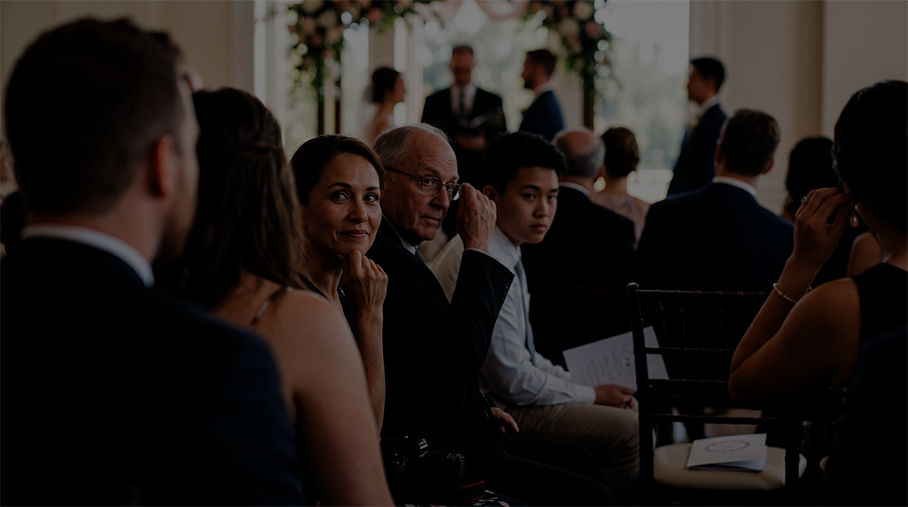
Most couples plan their ceremony from the front.
Standing there.
Facing out.
Thinking about what they’ll say, where to stand, what comes next.
But your guests? They’re experiencing it very differently.
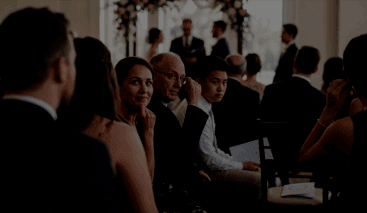
From a guest’s perspective
They’re:
- sitting
- listening
- watching
- trying to stay engaged
They’re not part of the structure.
They don’t know what’s coming next.
They’re not holding the script in their head.
They’re just reacting to what’s happening in real time
Most couples don’t realise this . . .
Guests disengage quickly when:
- the ceremony feels slow
- the structure isn’t clear
- the tone doesn’t land
Not because they don’t care.
But because they don’t feel pulled in
There’s nothing anchoring their attention.
What it actually feels like to sit through a ceremony
This is the part worth understanding.
Guests notice things like:
- how long it takes to get started
- whether they can hear properly
- whether they understand what’s happening
- whether the tone feels natural or slightly off
They don’t analyse it.
But they feel it.
The first 60 seconds matter more than you think
If a ceremony starts:
- cleanly
- confidently
- without confusion
Guests settle almost immediately.
If it starts:
- awkwardly
- with delays
- with unclear cues
That unsettled energy lingers.
Even if everything improves later
What guests actually respond to
- A clear, confident start
No wandering energy.
No “are we starting yet?” moments.
Just a clear shift into the ceremony
That’s what tells people: “This matters – pay attention”
- Natural language
Guests don’t expect perfection.
They respond to language that sounds like real people
If it sounds:
- over-written
- overly formal
- like it’s being performed
They don’t push back.
They just quietly disengage.
- Movement and pacing
Ceremonies that feel static lose people.
That doesn’t mean you need constant activity.
It means the ceremony needs to move
- ideas progress
- moments shift
- tone evolves
Good pacing keeps people with you without them noticing why.
- Emotional honesty
Not:
- over-the-top emotion
- forced sentiment
- dramatic delivery
Just something real.
Guests connect when they recognise truth – not performance.
Where ceremonies quietly lose people
This doesn’t happen in big, obvious ways.
It happens in small accumulations:
- too long before the vows
- too many transitions between sections
- trying too hard to be funny
- over-explaining moments instead of letting them land
- repeating the same sentiment in different ways
Each one chips away at attention.
The “polite attention” zone
There’s a point in some ceremonies where guests are still:
- sitting
- facing forward
- looking engaged
But mentally? They’ve drifted
They’re thinking about:
- what’s next
- how long this will go
- something completely unrelated
That’s the zone you want to avoid.
What keeps guests genuinely engaged
It’s not complexity.
It’s not more content.
It’s not adding extra “moments”.
It’s simplicity + clarity + tone
When a ceremony is:
- easy to follow
- well-paced
- grounded in real language
Guests stay with it.
Most couples don’t realise this . . .
Guests aren’t comparing your ceremony to others.
They’re not analysing structure.
They’re not scoring moments.
They’re just asking, subconsciously “Am I with this, or am I not?”
And that decision happens quickly.
What this means for your ceremony
If you want guests to stay engaged:
- start cleanly
- keep the structure tight
- don’t overload it
- let key moments breathe
- trust simple over complicated
That’s what creates a ceremony people actually experience – not just sit through.
Final thought
Your guests won’t remember:
- how many elements you included
- how many people spoke
- how detailed it was
They remember how it felt to sit there.
Whether they were:
- comfortable
- engaged
- present
Or just waiting for it to end
If you want a ceremony people actually stay with
That’s where I come in.
I work with couples who:
- don’t want anything overfilled or awkward
- care about how the ceremony lands
- want something clear, natural, and genuinely engaging
Enquire / Check my availability here.





Get the latest wedding ceremony news, advice & tips
Sent straight to your email each month