


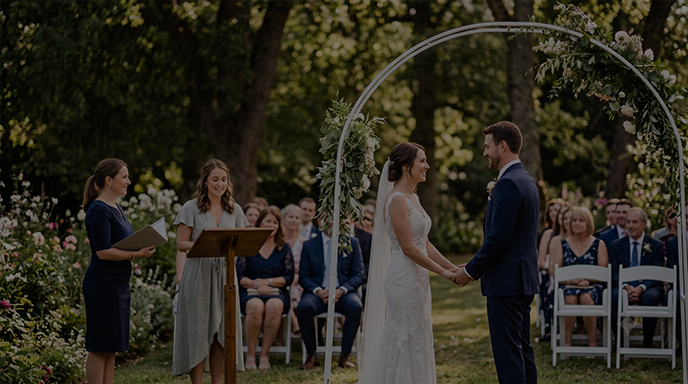
There’s a quiet pressure in wedding planning that doesn’t get talked about much.
It doesn’t show up as a big decision.
It shows up in small questions like:
- “Should we include them?”
- “Will they expect to be involved?”
- “Do we need to give people roles?”
And before you realise it, your ceremony starts filling up with:
- extra speakers
- extra moments
- extra structure
Not because you want it.
Because it feels expected.
Most ceremonies don’t need more voices
There’s an assumption that more people involved = more meaningful ceremony
It sounds right.
But it isn’t.
In practice, the opposite is often true.
The more voices you add:
- the harder it is to maintain flow
- the more the tone shifts (often unintentionally)
- the more the ceremony loses its centre
And that centre is meant to be: you
What a ceremony is actually trying to do
This is where things get clearer.
A ceremony isn’t a collection of moments.
It’s one continuous experience
And like anything that flows, it works best when:
- the tone is consistent
- the pacing is controlled
- and the focus is clear
Too many speakers disrupt that.
Not dramatically – just enough that it stops feeling cohesive.
So who actually needs to speak?
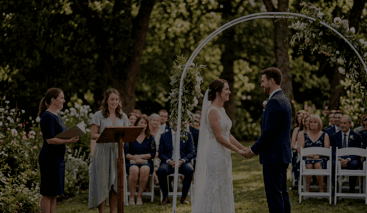
In most ceremonies, you only need:
- the celebrant → holds the structure, guides the moment, sets the tone
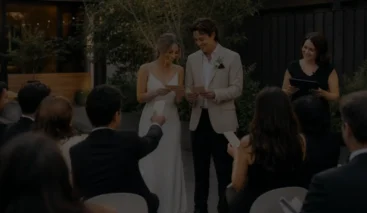
- you (your vows) → the emotional centre of the ceremony
- optional: one reading → if it genuinely adds something
That’s it.
Everything else is optional – not essential.
Where things usually go wrong
It rarely happens all at once.
It builds slowly.
Couples add:
- a reading for one side
- another for the other side
- a parent who wants to say something
- a “short reflection”
- a “quick welcome”
Each one feels reasonable.
Individually, they are.
Together? They change the entire rhythm of the ceremony
What was:
- clear
- intentional
- well-paced
becomes:
- stop-start
- uneven
- harder to follow
Most couples don’t realise this . . .
Guests don’t need:
- more voices
- more content
- more perspectives
They need clarity, connection, and something they can follow
When a ceremony is clean and well-paced:
- people stay engaged
- moments land properly
- it actually feels like something
When it’s crowded, attention drifts – even if people don’t mean for it to
The difference between inclusion and over-inclusion
This is where a lot of couples get stuck.
They want to:
- include important people
- acknowledge relationships
- make others feel part of the day
All valid.
But inclusion doesn’t have to mean giving someone the microphone
There’s a difference between:
- meaningful involvement
- and inserting extra ceremony moments
Better ways to involve people
If you’re feeling pressure to include others, there are cleaner ways to do it:
- signing witnesses → simple, meaningful role
- pre-ceremony support → helping you prepare or arrive
- reception speeches → a much better space for longer reflections
- quiet acknowledgement in the ceremony → without handing over the structure
Not everything needs to happen in the ceremony itself
A quick gut check
If you’re considering adding someone to speak, ask:
- Does this genuinely add something?
- Will it improve the flow – or interrupt it?
- Are we doing this because we want to, or because we feel like we should?
That last question is usually the one that answers everything.
A simple structure that actually works
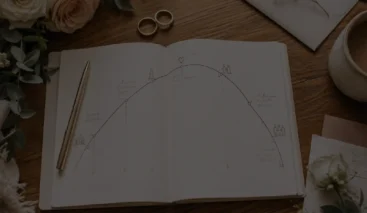
Most strong ceremonies follow a structure like:
- Welcome
- Short love story / context
- Legal wording
- Vows
- Ring exchange
- Close
It’s simple.
That’s why it works.
What happens when you keep it focused
When you don’t overfill the ceremony:
- the vows carry more weight
- the pacing feels natural
- the tone stays consistent
- guests stay with you
And – most importantly – the ceremony feels like a single, clear moment, not a collection of parts
Final thought
The best ceremonies don’t try to include everyone.
They include exactly what’s needed – and nothing extra
That’s what makes them feel:
- grounded
- engaging
- and genuinely memorable
If you want help getting that balance right
That’s where I come in.
I work with couples who:
- want a ceremony that flows properly
- don’t want anything overfilled or awkward
- want something clear, modern, and genuinely them
Enquire / Check my availability here.





Get the latest wedding ceremony news, advice & tips
Sent straight to your email each month